
Fake CAPTCHA Triggers Hidden International SMS Scam
Blog post description.
MOBILE SECURITY THREAT
5/6/20269 min read
Fake Captcha and International SMS Scam
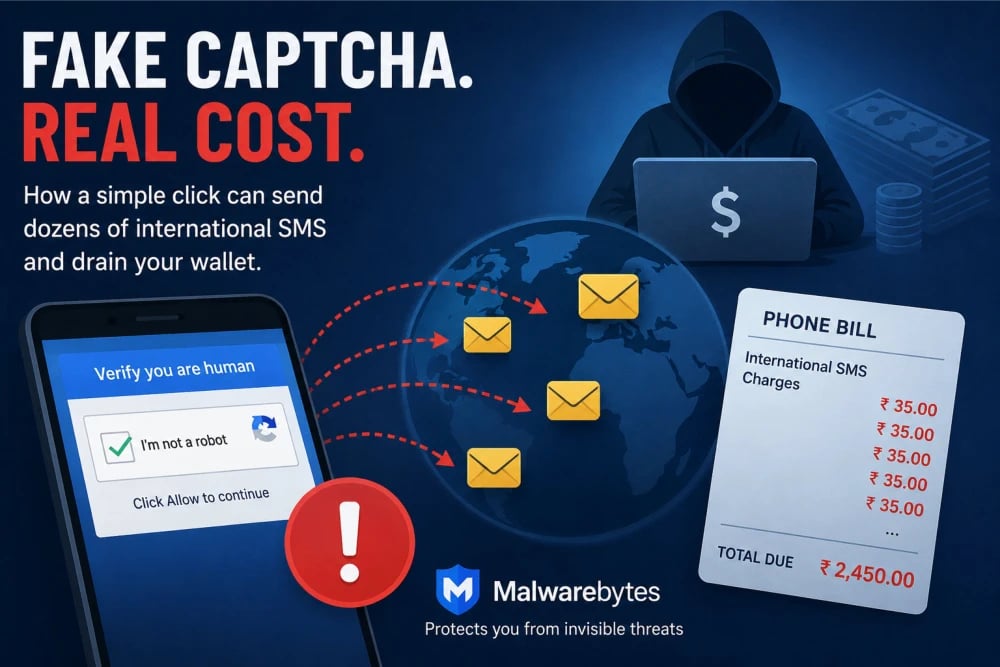
Install Malwarebytes on your Phone Stop SMS Fraud using a Fake CAPTCHA. A fake CAPTCHA may look harmless, but it can quietly trigger a costly scam on your mobile device. When you tap “I’m not a robot,” hidden scripts can initiate multiple international SMS messages in the background without your knowledge. These messages are sent to premium-rate numbers controlled by cybercriminals, generating revenue through International Revenue Share Fraud (IRSF). Instead of installing visible malware, this clever attack exploits telecom billing systems and affiliate networks, turning a simple click into a stream of paid messages. You only discover the damage when your phone bill arrives with shocking charges. This is where Malwarebytes steps in by blocking malicious pages, stopping hidden exploits, and protecting your device from invisible threats before they can cost you money.
Fake CAPTCHA and Hidden SMS Fraud
The internet has trained us to trust certain visual cues, and one of the most familiar is the CAPTCHA. You’ve seen it countless times—“I’m not a robot”—and instinctively clicked it without a second thought. But cybercriminals have evolved alongside our habits. Today, fake CAPTCHA pages are being weaponized in a sophisticated scam that targets mobile users in particular. Instead of installing obvious malware, these scams quietly manipulate telecom systems to generate revenue through International Revenue Share Fraud (IRSF). The result? Victims unknowingly send multiple international SMS messages, often without ever seeing them, and later face shockingly high phone bills. This isn’t just a technical trick—it’s psychological manipulation combined with telecom exploitation. Understanding how this scam works is the first step toward protecting yourself, and tools like Malwarebytes play a crucial role in preventing such invisible threats from causing financial damage.
What Is a CAPTCHA and Why We Trust It
CAPTCHAs were originally designed as a security feature to distinguish humans from bots. Whether it’s selecting images, typing distorted text, or ticking a simple checkbox, the goal is to prevent automated abuse of websites. Over time, users have become conditioned to trust CAPTCHA prompts because they appear on legitimate platforms like login pages, payment gateways, and signup forms. This familiarity is exactly what scammers exploit. Fake CAPTCHA pages mimic the design and behavior of genuine ones so convincingly that even cautious users can be fooled. On mobile devices, where screens are smaller and attention spans shorter, it becomes even easier to overlook subtle inconsistencies. By presenting a seemingly harmless action, attackers lower your guard. What follows isn’t a virus download or suspicious app installation—but something far more subtle and financially damaging, making it harder to detect until it’s too late.
The Shift from Malware to Monetization
Traditional cyberattacks often relied on installing malware to steal data or take control of devices. However, modern scams are shifting toward monetization strategies that don’t require persistent access to your phone. IRSF campaigns are a perfect example. Instead of infecting your device, attackers exploit telecom billing systems and international SMS routing to generate revenue. This approach is stealthier and often bypasses traditional antivirus detection because no malicious file is installed. The fake CAPTCHA scam is part of this evolution. It tricks users into performing actions that authorize or trigger premium SMS services. These messages are sent to international numbers controlled by scammers, who earn a share of the revenue. It’s a clever system: you don’t lose control of your phone, but you unknowingly fund the attacker’s operation. This makes awareness and proactive protection tools like Malwarebytes more important than ever in today’s threat landscape.
How the Fake CAPTCHA Scam Begins
The scam typically starts with a seemingly harmless click. You might land on a website through an ad, a redirect, or even a legitimate-looking link shared on social media. Suddenly, a CAPTCHA appears, asking you to verify that you’re human. The page looks convincing—clean design, familiar wording, and sometimes even branding elements that mimic well-known platforms. When you tap the checkbox or follow the instructions, you’re unknowingly triggering a hidden process. On mobile devices, this may involve executing scripts or initiating background actions that interact with your phone’s messaging capabilities. Unlike traditional scams, there’s no obvious warning sign. You don’t download an app or grant explicit permissions. Everything happens behind the scenes, making it incredibly difficult for the average user to detect. By the time you realize something is wrong, the damage—in the form of international SMS charges—has already begun.
The Role of Background SMS Activity
One of the most alarming aspects of this scam is its ability to send SMS messages in the background. Once the fake CAPTCHA interaction is completed, scripts can trigger processes that send multiple international text messages without your awareness. These messages are often directed to premium-rate numbers in foreign countries. Because they’re sent silently, you won’t see them in your messaging app or receive notifications. This invisibility is what makes the scam so effective. Mobile operating systems do have safeguards, but attackers continuously find ways to exploit loopholes or rely on user actions that indirectly authorize these processes. The result is a steady stream of outgoing messages that rack up charges quickly. Each message may cost a small amount, but dozens or even hundreds can be sent in a short period, leading to a surprisingly high bill.
What Is International Revenue Share Fraud (IRSF)?
International Revenue Share Fraud, or IRSF, is a type of telecom fraud where scammers generate income by sending traffic—calls or SMS—to premium-rate international numbers. These numbers are often owned or controlled by the attackers themselves or their partners. Every time a message is sent, a portion of the fee is shared with the number owner, hence the term “revenue share.” In the context of fake CAPTCHA scams, victims unknowingly become participants in this system. Their phones send messages that generate revenue for the scammers. It’s a highly profitable model because it scales easily and doesn’t rely on stealing personal data. Instead, it leverages existing telecom infrastructure and billing systems. This makes IRSF campaigns particularly dangerous, as they can operate under the radar and affect thousands of users simultaneously without triggering immediate suspicion.
Why Mobile Users Are Prime Targets
Mobile users are especially vulnerable to this type of scam for several reasons. First, smartphones are always connected, making it easier for background processes to execute quickly. Second, mobile interfaces often hide technical details, reducing the chances of users noticing suspicious activity. Third, telecom billing for mobile devices is more complex, especially when it comes to international charges. Many users don’t regularly monitor their SMS usage or understand how premium messaging works. This creates the perfect environment for IRSF scams to thrive. Additionally, mobile users frequently browse the web through ads and redirects, increasing their exposure to malicious pages. The combination of convenience, limited visibility, and complex billing systems makes mobile devices an ideal target for attackers. This is why having dedicated mobile protection, such as Malwarebytes, is no longer optional—it’s essential.
The Financial Impact on Victims
The financial consequences of this scam can be severe. Victims often discover the issue only when they receive their phone bill, which may include unexpected international SMS charges. Depending on the number of messages sent and the rates applied, the total can range from a few hundred to several thousand rupees—or even more in extreme cases. Because the messages are technically sent from the user’s device, disputing these charges with telecom providers can be challenging. Many carriers consider them valid transactions unless there is clear evidence of fraud. This leaves victims in a difficult position, forced to pay for something they never knowingly authorized. Beyond the monetary loss, there’s also the stress and confusion of dealing with the situation. Preventing such incidents is far easier than resolving them after the fact, highlighting the importance of proactive cybersecurity measures.
How Scammers Exploit Telecom Systems
At the heart of this scam is a deep understanding of how telecom systems and billing networks operate. Scammers know that international SMS routes can be monetized through revenue-sharing agreements. They also understand how to trigger these messages without raising immediate red flags. By using web-based interactions instead of traditional malware, they bypass many security checks. The fake CAPTCHA serves as the entry point, but the real magic happens in the background, where scripts interact with telecom APIs or exploit device behaviors. This level of sophistication shows that modern cybercrime is no longer just about hacking—it’s about exploiting entire ecosystems. From web design to telecom billing, every component is leveraged to maximize profit. This makes it crucial for users to rely on advanced security solutions that can detect and block such multi-layered threats.
Signs That You Might Be Affected
Although the scam is designed to be stealthy, there are a few warning signs to watch for. Unusual battery drain, unexpected data usage, or a sudden increase in SMS activity (if visible) can indicate something is wrong. However, the most common sign is an unusually high phone bill with international SMS charges. You might also notice unfamiliar numbers in your billing statement. If you experience any of these symptoms after interacting with a suspicious website or CAPTCHA, it’s important to act quickly. Disconnect from the internet, review your app permissions, and consider using a trusted security tool to scan your device. Early detection can help minimize the financial impact and prevent further unauthorized activity. Awareness is your first line of defense, but having reliable protection is what truly keeps you safe.
Why Traditional Antivirus May Not Be Enough
Many users rely on traditional antivirus software to protect their devices, but this type of scam often falls outside its scope. Since no malware is installed, there’s nothing for the antivirus to detect in the conventional sense. The attack relies on legitimate system functions and user interactions, making it harder to classify as malicious. This is where advanced cybersecurity solutions like Malwarebytes stand out. They focus not just on detecting malware, but also on identifying suspicious behavior, blocking malicious websites, and preventing exploit-based attacks. By analyzing patterns and blocking known scam domains, Malwarebytes can stop the attack before it even begins. This proactive approach is essential in a world where threats are becoming more sophisticated and less reliant on traditional infection methods.
The Role of Safe Browsing Habits
While technology plays a crucial role in protection, user behavior is equally important. Being cautious about the websites you visit and the links you click can significantly reduce your risk. Avoid clicking on suspicious ads or pop-ups, especially those that redirect you to unfamiliar pages. If a CAPTCHA appears unexpectedly, take a moment to assess its legitimacy. Does it look out of place? Is it asking for unusual actions? Trust your instincts. Additionally, keep your device and apps updated to ensure you have the latest security patches. Combining safe browsing habits with a robust security solution creates a strong defense against scams like fake CAPTCHA IRSF campaigns.
How Malwarebytes Protects You
Malwarebytes offers comprehensive protection against modern threats, including those that don’t involve traditional malware. Its real-time protection blocks malicious websites before they can load, preventing fake CAPTCHA pages from ever reaching you. It also detects exploit attempts and suspicious behavior, stopping attacks at multiple stages. For mobile users, Malwarebytes provides dedicated features that monitor and secure your device against hidden threats. This means you’re protected not just from viruses, but from sophisticated scams that exploit system vulnerabilities and user trust. With its lightweight design and powerful detection capabilities, Malwarebytes ensures that your online experience remains safe and worry-free.
Real-World Scenario: A Costly Click
Imagine browsing your phone late at night and clicking on a trending article. Suddenly, a CAPTCHA appears, asking you to verify your identity. You tap it without hesitation, and the page loads normally. Everything seems fine. A few weeks later, you receive your phone bill and notice hundreds of rupees in international SMS charges. Confused, you contact your carrier, only to learn that messages were sent from your device. This is a typical scenario in IRSF scams. The initial action seemed harmless, but it triggered a chain of events that led to financial loss. With Malwarebytes installed, that fake CAPTCHA page would have been blocked, preventing the entire incident. It’s a simple example that highlights the importance of proactive protection.
Steps to Take If You’re Affected
If you suspect you’ve fallen victim to this scam, act quickly. Start by contacting your telecom provider to report the issue and request a detailed billing breakdown. Disable international SMS services if possible. Next, scan your device using a trusted security tool like Malwarebytes to ensure there are no lingering threats. Review your browsing history and avoid revisiting suspicious sites. You may also consider resetting your device settings if the issue persists. While recovering lost money can be challenging, taking immediate action can prevent further damage. Being proactive and informed is the best way to regain control and protect yourself from future attacks.
The Future of Cyber Scams
As technology evolves, so do cyber threats. Scammers are constantly finding new ways to exploit systems and user behavior. The fake CAPTCHA IRSF scam is just one example of how attacks are becoming more subtle and sophisticated. Instead of relying on obvious malware, attackers are leveraging trust, psychology, and infrastructure. This trend is likely to continue, making it essential for users to stay informed and equipped with the right tools. Cybersecurity is no longer just about avoiding viruses—it’s about understanding how digital systems can be manipulated. Staying ahead of these threats requires a combination of awareness, vigilance, and advanced protection solutions.
Final Words: Stay Safe, Stay Smart
The fake CAPTCHA scam is a powerful reminder that not all threats are visible. By exploiting trust and telecom systems, cybercriminals have created a highly effective and profitable scheme. For novice users, understanding how these scams work is the first step toward staying safe. But knowledge alone isn’t enough. Investing in reliable protection like Malwarebytes ensures that you’re safeguarded against both known and emerging threats. In today’s digital world, where even a simple click can have costly consequences, being proactive is the smartest choice. Protect your device, monitor your activity, and never underestimate the importance of cybersecurity.
Cyber Security Threats
Malwarebytes Premium
Protect all your devices from all Malware and Viruses
© 2025. All rights reserved.