
Email Phishing Attacks: FaceBook Accounts Stolen
In a recent email phishing attacks, thousands of Facebook accounts were stolen. Learn how Malwarebytes, the leading anti-malware software, can protect you from these sophisticated phishing attacks and other cyber threats. Install it on all your devices for real-time protection and peace of mind.
PHISHING ATTACK
5/12/20267 min read
Email Phishing Attacks on FaceBook Accounts
In the recent Email Phishing Attacks abusing Gmail, thousands of FaceBook account were stolen. You could prevent this from happening by just installing Malwarebytes on all your devices. Malwarebytes is the world's number one anti-malware software that protects you from phishing attacks using its behavioral analysis and real-time protection. It protects you from all malware, viruses, trojans, ransomware, browser hijackers, rootkits, keyloggers, and much more including those that traditional antivirus software misses. Malwarebytes works with your installed antivirus software also.

Thousands of Facebook Accounts Stolen Through Email Phishing Attacks
Thousands of Facebook users recently discovered that their accounts had been stolen after falling victim to highly convincing email phishing attacks. Many of these emails appeared completely legitimate because they copied the official Facebook and Meta branding almost perfectly. Victims received messages claiming their pages violated community guidelines, their advertisements were suspended, or their accounts were about to be permanently deleted unless immediate action was taken. Panic caused many people to click fake verification links without carefully checking the sender details. Once they entered their usernames and passwords on fraudulent websites, attackers instantly captured their login information and took control of their accounts. Small business owners, digital marketers, and creators were among the most affected because their Facebook pages often contained advertising accounts, customer data, and payment methods. Cybercriminals understand that fear and urgency push people into making quick decisions. That is exactly why phishing attacks continue to succeed despite years of warnings about suspicious emails and online fraud.
Why Email Phishing Attacks Were So Dangerous
What made this email phishing attacks especially dangerous was the sophistication of the emails themselves. Attackers abused trusted email delivery services and even legitimate cloud platforms to bypass spam filters and security systems. Instead of using obviously fake domains, scammers created emails that looked professionally designed and included official-looking logos, support language, and clickable buttons that redirected users to fake login pages nearly identical to Facebook’s real website. Many victims later admitted they saw no obvious warning signs at first glance. Some phishing pages even included fake live chat support systems and automated verification messages to appear authentic. Cybercriminals know that modern users are more cautious than before, so they continuously improve their techniques to appear more believable. In many cases, people who lost access to their accounts were experienced internet users, not beginners. This shows how phishing attacks have evolved into highly organized operations capable of fooling almost anyone during stressful situations, especially when social media accounts are tied to personal income or business operations.
The Real Damage After a FaceBook Account Gets Stolen
Losing access to a Facebook account is far more serious today than it was years ago. Many people use Facebook not only for social networking but also for business advertising, customer communication, and marketplace transactions. Once cybercriminals gained access to stolen accounts, they immediately changed passwords, removed recovery emails, and enabled their own security settings to lock out the real owners. Some attackers used compromised business accounts to launch fraudulent advertising campaigns using victims’ saved payment methods, causing major financial losses within hours. Others used hacked accounts to spread additional phishing attacks to friends and followers, creating a chain reaction of scams. In certain cases, criminals impersonated business owners and requested payments from customers through fake promotions or urgent messages. The emotional damage was equally severe because victims lost years of personal memories, photographs, and conversations stored inside their accounts. Recovering hacked social media accounts through email phishing attacks can also be extremely frustrating because identity verification processes often take days or even weeks, leaving victims feeling helpless and vulnerable.
How Attackers Manipulate Human Psychology
Phishing attacks work primarily because they manipulate human emotions rather than exploiting technical weaknesses alone. Cybercriminals carefully design their emails to trigger fear, urgency, curiosity, or panic. For example, a message claiming “Your Facebook page will be deleted within 24 hours” forces users into reacting emotionally before thinking logically. Business owners become especially vulnerable when they fear losing customer access or advertising revenue. Attackers also create a false sense of authority by pretending to represent trusted companies like Meta or Facebook support teams. Once people believe the message is official, they are more likely to comply quickly. Many phishing emails even include fake case numbers, policy references, and professional formatting to appear authentic. These scams prove that cybersecurity is not only about software and firewalls but also about human behavior. Even highly intelligent individuals can make mistakes and fall victim to phishing when emotionally pressured. Understanding these psychological tactics is one of the most important steps toward preventing future phishing attacks and improving personal online security habits in daily life.
Why Traditional Antivirus Alone Is Not Enough
Many users believe that installing a standard Antivirus program is enough to protect them from online threats, but phishing attacks often bypass traditional security systems because they target human trust directly. Unlike classic malware that infects devices through downloads or infected files, phishing attacks convince users to voluntarily hand over sensitive information. This means the danger of phishing attacks comes from deceptive websites and fake emails rather than obvious malicious software. Modern phishing campaigns also change domains frequently, making detection harder for basic antivirus tools. Some fake websites exist for only a few hours before attackers move to new domains. As phishing techniques become more advanced, users need security solutions specifically designed to detect fraudulent websites, suspicious email links, and dangerous online behavior in real time. This is where advanced cybersecurity software like Malwarebytes becomes essential. Protection today requires multiple security layers working together, including web protection, malicious link blocking, scam detection, and real-time monitoring capable of identifying threats before users accidentally interact with dangerous content online.
How Malwarebytes Helps Stop Phishing Attacks
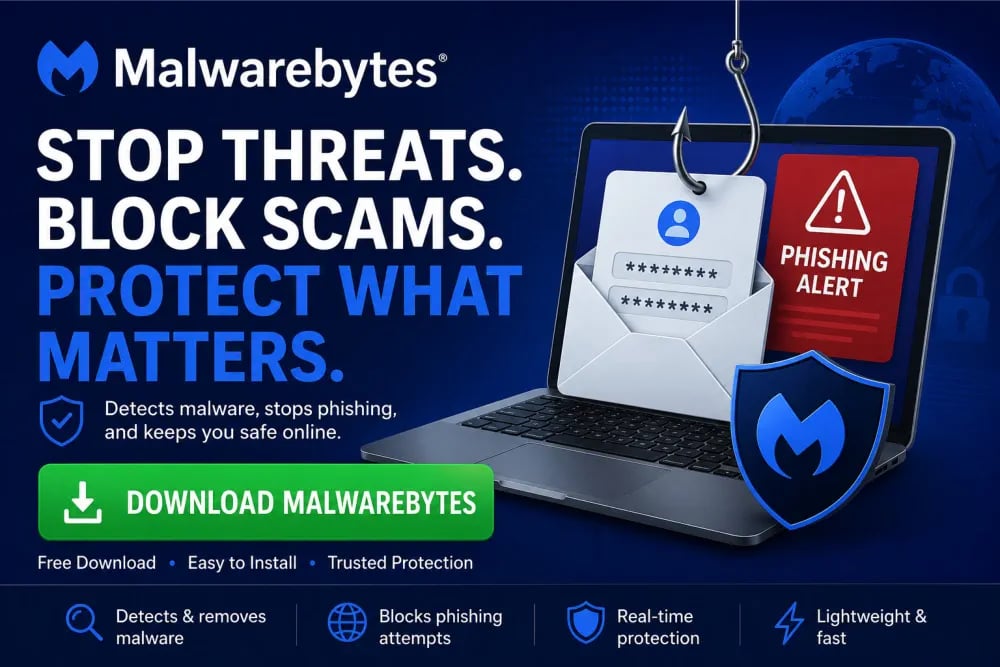
Malwarebytes offers several powerful security features specifically designed to protect users against phishing attacks and malicious websites. One of its strongest defenses is real-time web protection that automatically blocks dangerous links before fake websites can even load in the browser. If email phishing attacks directs users to a fraudulent Facebook login page, Malwarebytes can detect the suspicious domain and stop access instantly. This protection works quietly in the background, helping users avoid mistakes before damage occurs. Malwarebytes also monitors for malicious downloads, browser hijackers, spyware, and credential-stealing malware that attackers often use after phishing attempts succeed. It has advanced threat detection systems continuously update to identify newly emerging scams and phishing domains. Unlike basic antivirus programs focused mainly on infected files, Malwarebytes actively defends against modern online scams targeting personal accounts and sensitive data. This proactive approach gives users an extra layer of protection during everyday internet browsing, email usage, and social media activity.
Real-Life Situations Where Malwarebytes Makes a Difference
Imagine a small online business owner receiving an email claiming their Facebook advertisement violated platform policies. The message includes a button labeled “Verify Account Now.” Without protection, the user may click the phishing link and unknowingly enter login credentials into a fake website. However, with Malwarebytes running in the background, the dangerous phishing page could be blocked instantly before any information is entered. In another situation, a student might receive a fake security alert claiming their social media account has suspicious activity. Since phishing pages often look identical to real websites, many users fail to notice subtle differences in domain names. Malwarebytes helps by warning users about fraudulent pages and suspicious redirects before damage occurs. These protections are valuable because phishing attacks happen extremely quickly, often taking only seconds to compromise an account. Many victims later admit they realized the mistake only after attackers changed passwords and removed recovery access. Preventing the initial click is therefore one of the most effective cybersecurity defenses available today.
Better Online Safety Habits Against Phishing
While cybersecurity software provides strong protection, users should also develop safer online habits to reduce the risk of phishing attacks. One of the most important rules is never clicking urgent links inside emails without verifying their authenticity first. Instead of using embedded buttons, users should manually visit official websites through trusted bookmarks or browser searches. Carefully checking sender addresses is also critical because phishing emails often use subtle spelling tricks or suspicious domains. Enabling two-factor authentication on Facebook and other important accounts adds another security layer by requiring verification codes during login attempts. Even if passwords are stolen, attackers may still be blocked from accessing accounts without the second verification step. Users should also avoid reusing passwords across multiple websites because one stolen password can compromise several accounts simultaneously. Combining strong cybersecurity habits with trusted protection software creates a much stronger defense against modern phishing attacks. Awareness, caution, and proactive security tools together significantly reduce the chances of becoming the next phishing victim online. And having a robust software like Malwarebytes could keep all your devices always protected.
Why Phishing Attacks Continue to Increase Worldwide
Email Phishing attacks continue growing globally because they remain highly profitable for cybercriminals while requiring relatively low technical effort compared to sophisticated hacking operations. Instead of breaking through complex security systems, attackers simply trick people into giving away their passwords willingly. Social media platforms like Facebook are especially attractive targets because compromised accounts can be used for advertising fraud, identity theft, cryptocurrency scams, and spreading malware to additional victims. The rise of remote work, online shopping, and digital business operations has also created more opportunities for scammers to exploit human trust through email phishing attacks. Artificial intelligence tools are now helping attackers create more convincing phishing emails with fewer spelling mistakes and more personalized content. As cybercrime evolves, phishing campaigns are becoming faster, smarter, and harder to detect visually. This growing threat of email phishing attacks highlight why cybersecurity awareness and advanced protection software are no longer optional for internet users. Everyone using email, social media, or online banking faces potential exposure to phishing attacks almost daily.
Staying Safe in an Increasingly Dangerous Digital World
The recent theft of thousands of Facebook accounts through phishing emails phishing attacks was the culprit that gives out a powerful reminder that online threats continue evolving rapidly. Cybercriminals no longer rely only on crude scams filled with spelling mistakes and suspicious graphics. Modern phishing attacks are polished, convincing, and emotionally manipulative enough to fool even cautious users. Protecting personal information today requires a combination of awareness, smart online behavior, and reliable cybersecurity software capable of stopping threats before they cause harm. Malwarebytes Premium Protection helps users stay safer by blocking malicious websites, detecting phishing attempts, and providing real-time protection against evolving online scams. In a world where social media accounts often contain personal memories, financial information, and business operations, cybersecurity has become essential for everyday life. Taking phishing threats seriously today can prevent devastating account losses tomorrow. Simple precautions, combined with trusted security tools, can make a major difference in staying protected against increasingly sophisticated email phishing attacks worldwide.
Cyber Security Threats
Malwarebytes Premium
Protect all your devices from all Malware and Viruses
© 2025. All rights reserved.